
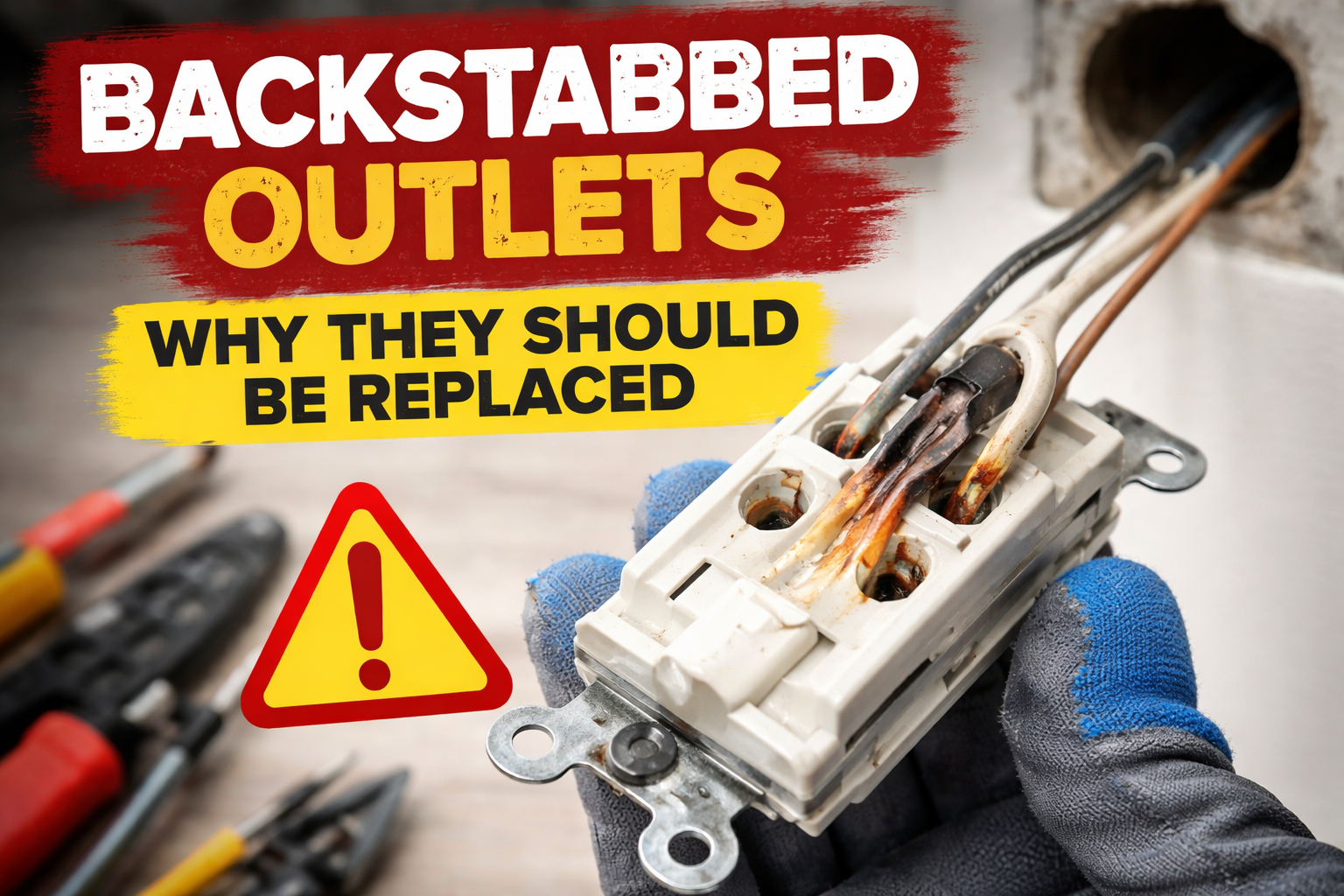
Why Backstabbed Outlets Should Be Replaced Copy 4
A Simple Guide From Basic Understanding to Electrical Safety
Most homeowners assume that if their outlets and switches are working, then everything behind them must be fine. Lights turn on, devices charge, and the house seems to function normally. However, inside many homes there is a very common electrical installation method that can quietly create long-term reliability and safety issues. This method is known as “backstabbing.”
Understanding what backstabbed outlets are, why electricians are concerned about them, and why they are often replaced during electrical service is important for anyone who owns a home.
What Is a Backstabbed Outlet?
Inside every outlet or switch there are terminals where the electrical wires connect. There are two main ways electricians attach the wires to these devices.
One method uses screw terminals. In this method, the electrician wraps the wire around a screw and tightens it down so the wire is firmly clamped in place.
The other method is called backstabbing. With this method, the electrician simply pushes the wire into a small hole in the back of the outlet. Inside the device, a small spring clip grabs the wire and holds it in place.
Backstabbing became popular because it allows electricians to install outlets much faster. Instead of bending wires and tightening screws, the wire is simply pushed into the device.
While this method saves time during installation, it can introduce problems over time.
Why Backstabbed Connections Can Become a Problem
The main concern with backstabbed outlets is the type of connection being made.
A screw terminal connection tightly compresses the wire against metal, creating a strong mechanical and electrical bond. A backstab connection relies only on a small internal spring clip pressing against the wire.
Over the years, several things can happen that weaken this type of connection.
1. Heat and Cooling Cycles
Every time electricity flows through a circuit, the wiring warms slightly. When the circuit turns off, it cools down again. These repeated heating and cooling cycles cause materials to expand and contract.
Over time, this movement can slowly loosen the pressure of the spring clip inside a backstab connection.
When the pressure weakens, the connection becomes less secure.
2. Increased Electrical Resistance
Electricity flows best through tight, solid connections. When a connection becomes loose, electrical resistance increases.
Resistance creates heat.
This heat can damage the outlet, discolor wires, or in extreme cases melt the plastic body of the device.
Many electricians have opened outlets and found:
- Burned wires
- Melted plastic
- Scorch marks on the device
All caused by weak connections.
3. Arcing
A loose electrical connection can also create something called arcing.
Arcing happens when electricity jumps across a small gap between conductors. This creates intense heat and can damage wiring or devices.
Even if the outlet still appears to work, arcing may be occurring inside the device where it cannot be seen.
4. Intermittent Power Problems
Another common symptom of backstabbed outlets is inconsistent electrical performance.
Homeowners may notice things like:
- Lights flickering
- Outlets that work sometimes but not others
- Circuits that randomly stop working
- Devices losing power unexpectedly
In many cases, these issues trace back to a weak connection inside a backstabbed outlet.
Why Electricians Replace Backstabbed Devices
When electricians perform electrical inspections, maintenance, or device replacement, they often recommend replacing backstabbed outlets.
The goal is not simply to replace the outlet, but to improve the quality of the electrical connection.
During replacement, the electrician will typically reconnect the wires using screw terminals instead of push-in connections.
This creates:
- A tighter mechanical connection
- Better electrical conductivity
- Reduced risk of heat buildup
- Longer lasting performance
It is a small improvement that can significantly increase the reliability of a circuit.
Important Clarification: Backstabbed Outlets Are Not Always “Failed”
It is important to understand that many backstabbed outlets may function for years without obvious problems.
However, electricians view these connections as a weaker long-term design compared to screw terminals.
Replacing them is considered preventative maintenance, similar to replacing worn components before they fail.
The goal is to reduce the chance of future electrical problems.
What Happens During a Device Replacement
When an electrician replaces backstabbed outlets, the process usually involves:
- Turning off power to the circuit
- Removing the existing outlet or switch
- Inspecting the wiring for any heat damage
- Reconnecting the wires using screw terminals
- Installing a new high-quality device
- Testing the circuit for proper operation
This ensures the connection is secure and the device operates safely.
The Bigger Picture of Electrical Safety
Electrical systems are made up of many small connections working together.
A single loose connection may seem minor, but over time these small issues can affect the reliability of the entire circuit.
By upgrading weaker connections to stronger ones, electricians help ensure the electrical system operates safely for years to come.